I see where the spectacular The Lehman Trilogy has opened on Broadway after brief off-Broadway runs. I saw the show in London with two-thirds of the three-man cast now appearing in NY, so I’m rerunning that piece below. What was really striking in looking back is that I happened to go to this show between visits to Fiddler on the Roof and Sweat, which made up a trilogy of its own of sorts showing the breakdown from tradition and community to an every-man-for-himself mentality. Here are my thoughts. Continue reading
A Balance (由宇子の天秤)
- 由宇子の天秤 (A Balance)
9/25/21 (Sat), Tokyo
The second feature by 40-something director/writer Harumoto Yujiro. The English title is lame: the “balance” (tenbin) in the Japanese title (literally Yuko’s Tenbin) refers to a set of scales like those held by Lady Justice. Here, documentary filmmaker Yuko is forced to weigh her values when the tables turn on her and the subject becomes the prey.
Kiku and Isamu (キクとイサム)
- キクとイサム (Kiku and Isamu)
8/5/21 (Thurs)
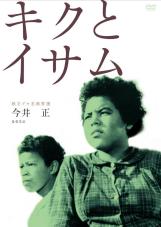
Imai Tadashi’s 1959 film about two half-black siblings in a farming community at the foot of Mt. Bandai in Fukushima Prefecture. The film interestingly came out the same year as the highly successful remake of Imitation of Life and Cassavetes’ experimental Shadows, which both deal similarly with mixed-race or light-skinned blacks, as did that year’s Bunraku puppet drama 白いお地蔵さん (The White Buddha). Wonder if it was something in the air.
Ashes and Diamonds (Popiół i Diament)
- Ashes and Diamonds
8/24/21 (Tues)
Andrzej Wajda’s 1958 film is apparently the third in an unplanned trilogy about wartime Poland. The story takes place over the course of the day of victory over Germany, but no one is celebrating amid the uncertainty over the country’s future as it simply moves into the hands of the Soviets. Maciek is a young resistance fighter who’s still resisting, more out of habit than closely held belief. He’s ordered to kill a Communist leader, a task he seems blankly to accept. He lolls around lazily on the grass waiting for his prey, then casually kills the approaching persons only to discover that he’s murdered two innocent men who happened upon the scene. This sets off a Hamlet-like crisis of confidence regarding the endless cycle of violence for questionable goals. His turmoil is exacerbated when he falls in love with a young barmaid, making him question his entire values. In addition, the target of his plot, though a Communist official, has returned from fighting in Spain and is not unsympathetic himself (maybe inevitably, given that the film was made under Communist rule). In the end, he feels bound to his lost cause and kills the official, who falls into his arms in a symbiotic moment of two characters caught in their own unforgiving philosophies. Maciek escapes but is hunted down and shot, and our last image is him dying in fetal position on a garbage heap in a huge field.
Maciek’s crisis is very much that of Poland, which, in going seamlessly from one dictatorial regime to another, must have wondered what all the fighting and dying was about. Continue reading
Her Brother (おとうと)
- おとうと (Her Brother)
8/9/21 (Mon)
Ichikawa Kon’s 1960 film. Sentimental schlock based on a novel by Koda Aya. Koda also wrote Flowing (流れる), the source for one of my all-time favorite films. No such luck here. Continue reading
I Know Where I’m Going
- I Know Where I’m Going
8/2/21 (Mon)
A 1945 romantic comedy by the Archers. It starts out like a screwball comedy, showing the lead female as a gritty infant crawling determinedly forward, as a little girl commanding Santa to bring her silk stockings, and as a snooty student. Shifting forward, the grown-up woman Joan (a fun Wendy Hiller), in full Katherine Hepburn mode, announces to her put-out middle-class father in Manchester that she is off to Scotland to marry a mega-rich industrialist around his age. All goes well at first as Joan travels in first-class cabins and ships, imagining herself in future luxury in a hilarious dream sequence. Unfortunately she arrives in Scotland to discover that a huge gale has shut down all boat transport to her intended’s island – the best-laid plans, as a famous Scot once said. So near and yet so far, she stays impatiently for days in the nearby village, where Torquil (Roger Livesey), a handsome young officer on leave (one of the few references to the war), is trying to get to the same island. It turns out that he is the laird (lord) of the island and has rented it to Joan’s fiancée. This is where screwball humor becomes more earthy and interesting.
Medea (NT Live)
- Medea (NT Live)
7/18/21 (Sun)
Carrie Cracknell’s 2014 production preserved in the invaluable NT Live series. I’m not a big fan of Medea since productions tend to be pretentious, especially with the irritating chorus (Noh does that much better). But I am a fan of Helen McCrory, who was so good in The Deep Blue Sea two years after this (also directed by Cracknell). The showing was in memory of McCrory following her tragic death from cancer at age 53 last year.
The Life and Death of Colonel Blimp
- The Life and Death of Colonel Blimp
7/22/21 (Thurs)
I had assumed somehow that this 1943 film by the Archers would be a gentle satire for wartime audiences given the title, which refers to a buffoonish soldier in a hugely popular cartoon of the day. But it uses that association instead as the starting point for a more interesting exploration of just how the character, here in the form of a Major-General Candy, got to where he is. It’s a thoughtful comedy showing the rise and decline of a soldier who fought eminently in the turn-of-the-century Boer War and WWI, only to be dumped in WWII for his old ideals. More generally, it’s about the inescapable nature of aging and the passing of generations.
Funeral Parade of Roses (薔薇の葬列)
- 薔薇の葬列 (Funeral Parade of Roses)
7/16/21 (Fri)
Matsumoto Toshio’s uncategorizable 1969 film about “gay boys”, a phrase used here mainly to refer to transvestites or male-to-female transgenders (the line isn’t clearly drawn). Having just seen John Cassavetes’ fragmented Shadows of ten years earlier, I thought I was ready for anything, but this psychedelic romp steps even further into the Twilight Zone. It’s drawn loosely from Oedipus Rex, which forms a framework of sorts, but that’s hardly the point in this house-of-mirrors experience.
The nominal story, set in contemporary Tokyo, revolves around the young and beautiful bar “hostess” Eddie (i.e., Oedipus – get it?), who is battling the bar’s aging kimono-clad Mama-san for the affections of an older gent. Eddie, whose long-absent father exists in his mind only as an old photo with the face burnt out, is haunted by memories of his mother laughing at his effeminate nature, beating him mercilessly after catching him putting on makeup, and screaming in horror as he stabs her to death when he finds her with a man (whom he also murders). Somehow he has found his way into Tokyo’s underground gay world, where he reigns as the most popular hostess at his bar among businessmen looking for a thrill. He ultimately wins the older gent, unwittingly causing the distraught Mama-san to commit suicide, and takes over the bar. Anyone familiar with Oedipus can see the rest coming, but it follows it more closely than I had imagined (too closely, to be honest) with one real shocker a la Buñuel in an expressionistic ending. Let’s just say that I’m glad the film’s in black-and-white.
Fires on the Plain (野火)
- 野火 (Fires on the Plain)
7/11/21 (Sun)
Kon Ichikawa’s eye-opening 1959 film is a grim look at the actual lived experience of Japanese soldiers in WWII on the losing end of the battle in Leyte. There’s no glamour, heroism or dignity here as the desperate soldiers, pursued by the advancing Americans, escape through the forests and rough landscape toward a small coastal town on rumors of a possible rescue. Food is scarce and hope is scarcer as they scrounge to survive. They maintain military order on the surface, but their morals gradually break down as fatigue, starvation, injury and fear take their toll both physically and mentally. While the war itself is never shown, death is a constant presence, and the film has no compunction about showing rotten flesh, amputated limbs, filthy bodies covered in dirt and excrement, blood spurting or oozing from wounds, and other delights. It’s all a bit much after a while, and I started to become inured to the horrors, though maybe that was the point.
Shadows
- Shadows
7/7/21 (Wed)
This short but rambling 1959 feature by John Cassavetes is supposedly a landmark in independent cinema, but I won’t hold that against it. He made a reportedly impenetrable improvised version two years earlier (which explains the background shot on Broadway showing The Most Happy Fella) but remade it with several re-shot scenes in a fuller and more scripted version. Given how disjointed the result is, I can’t imagine the original.
A Look Back: Funny Girl
A Look Back: Funny Girl
The production of Funny Girl due on Broadway next year, the first in nearly 60 years, appears basically a revival of the successful London production of 2015 with the same director, Michael Meyer, and same revised book by Harvey Fierstein. It played first at the small Menier Chocolate Factory, where it was a complete sellout, and then moved to the West End for another half-year. Here are some thoughts from the former.
This is the first big-time revival of the show since its initial run in the mid 1960s, meaning anyone who saw it as a teenager then would now be retirement age. The first question on anyone’s mind is: who’s going to play Barbra? Continue reading
 sekenbanashi