- La Promesse (The Promise )
7/8/22 (Fri)
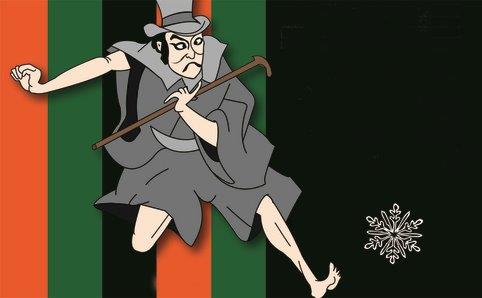
The Dardenne brothers’ breakout film of 1996. Continue reading
7/8/22 (Fri)
The Dardenne brothers’ breakout film of 1996. Continue reading
6/25/22 (Sat)
The Dardenne brothers’ 2019 film starts in the middle: when we meet Ahmed, an introverted Belgian teenager, he has already come under the spell of a charismatic imam and is becoming increasingly radicalized. He berates his mother for drinking wine and his sister for dressing like a normal Belgian girl, and refuses to shake his teacher’s hand because she teaches Arabic through popular song rather than the Koran and, worse, is dating a Jew. He eventually decides to cure the teacher by killing her. Continue reading
6/19/22 (Sun)
Iranian director Abbas Kiarostami based his 1990 maybe-it-was-maybe-it-wasn’t documentary on a true case in which an unemployed man managed to enter the lives of an upper-middle-class family by impersonating a famous film director. The setup recalls the stage show Six Degrees of Separation, where a black man claiming to be the son of Sidney Poitier puts one over on a wealthy white family – in fact, both shows oddly appeared in the same year. The latter, also based loosely on a true story, was a satiric jab at upper class pretensions in an artsy New York household, with a racial dimension to boot. Close-Up goes a step beyond that in using the actual people involved in the case in a semi-real, semi-staged format. Moreover, the focus is on the poor rather than the rich as the young man uses his deceit in an attempt to find dignity in his life.
6/16/22 (Thurs)
It’s a happy surprise to see that the City Center Encores! series has reversed course from its attempt to right the racist ways of the Broadway musical, returning to its original mission of presenting great theater. The three musicals chosen for next year, all worthy picks, are Jerry Herman’s notable flop Dear World (1969), the millennial operetta The Light in the Piazza (2005) and the British megahit Oliver! (1960).
5/7/22 (Sat), home
A charming offbeat 2011 French-language comedy by Finnish director Aki Kaurismäki. Marcel Marx (André Wilms, wonderful), whose character has gone from bohemian author in a previous film (La Vie de Bohème) to shoeshine man in the port city of Le Havre, comes across a young African migrant on the run from immigration authorities. When the kid follows him home, Marcel decides to help, hiding the boy in his small home to keep him out of the clutches of a Javert-like inspector. Some detective work by Marcel, using scraps of information and a quick trip to a migrant camp in Calais, reveals that the boy’s mother is living in London. The question then becomes how to smuggle the kid to the UK amid the watchful eyes of authorities, not least how to raise the money to accomplish that. Continue reading
5/6/22 (Fri)
Hamaguchi Ryusuke’s latest film, released due to pandemic issues around the same time as his Oscar-winning Drive My Car, is an omnibus of three stories with entirely different situations and actors. I actually saw the sections on separate occasions since they were basically unrelated other than the theme of coincidence and were by and large uninteresting.
4/10/22 (Sun)
A 2016 return to the horror genre by Kurosawa Kiyoshi. An inspector specializing in psychopaths finds his methods sorely tested when a criminal who he is trying to tame literally stabs him in the back and kills the hostage. His failure to match theory to reality leads to his retirement and naturally to a career in academia. He is lured back to the field when an unsolved case from years past that he fortuitously comes upon online has uncomfortable parallels with an odd character living in his new neighborhood.
The movie opens promisingly but soon dissolves into a series of all-too-convenient coincidences, unlikely personalities, and unconvincing character developments. Continue reading
10/3/21 (Sun)
Hitchcock’s 1935 version of John Buchan’s novel. Old-fashioned, not sure if the director was entirely serious. After gunshots interrupt a stage performance, a frightened stranger asks Hannay if she can stay the night with him – and he agrees. Really?? Very friendly town there, London. As he sleeps in the living room, she staggers in from his bedroom in the middle of the night and falls over – with a knife in her back. Really?? Running from the police, Hannay grabs a stranger in her train cabin and kisses her passionately in a desperate move to throw the cops off, to which she barely reacts – really?? Hitchcock gives little away in each scene, which is great in his more mature works, but here these touches can come off as contrived. I recalled the stage parody in which four actors played all of the dozens of characters that appear, and now having seen the original film, I wonder which one is the real parody.
9/27/21 (Mon)
Howard Hawk’s seminal gangster flick was released in 1932 after a year of fights with the censors and apparently released in a bowdlerized version. Producer Howard Hughes soon removed it from circulation and stuck it in his vaults, where it remained until his death in the 1970s. The version here is supposedly more or less the original, though irritating reminders of the censor’s stamp remain, such as the opening text warning us about the danger of gangsters and an irrelevant scene with a newspaper editor accusing politicians (and by extension the public) of failing to do their jobs. Fortunately the ending was left as originally filmed rather than the moralistic finale evidently demanded by the studio.
The movie was clearly based on Al Capone – try the title, for one thing – despite claims otherwise. Ben Hecht, one of the credited screenwriters (he was at the same time writing Twentieth Century for Hawks – now that’s versatility), knew Capone and must have consulted other gangsters given this level of verisimilitude. Whatever tinkering that the producers did to the results, Capone must have approved since no one seems to have been shot for it.
It is a dramatic and credible story extremely well told. Continue reading
9/27/21 (Mon)
Howard Hawks’ hilarious 1934 screwball comedy, boasting an ever-quotable script by Ben Hecht and Charles MacArthur based on their Broadway hit of two years earlier. I knew the basic story via the stage musical: a high-strung NY stage producer, down on his luck, finds himself on the same train liner from Chicago as his ex, now a big Hollywood star. He sees a golden opportunity to return to the spotlight – he just needs to create an entire play and sweet-talk her into starring in it by the time they arrive in New York. And the race is on.
The film has the usual breathless pace, screaming and exaggerated acting that characterize this genre, but it’s all done in great style. Continue reading
9/18/21 (Sat)
I wasn’t sure I was ready for more Godard after Breathless, but this 1963 film about filmmaking is considered one of the director’s more accessible works. Plus it had Brigitte Bardot, who seemed an unlikely choice for the lead.
9/7/21 (Tues)
I was already in Truffaut mode after The 400 Blows, so with the news of Jean-Paul Belmondo’s death, I immediately decided to watch the actor’s breakthrough Breathless, which was co-written by Truffaut. Jean-Luc Godard’s 1960 debut work is considered a milestone in film history – one critic says in apparent seriousness that movies can be divided into pre- and post-Breathless. It stands with the previous year’s Blows as one of the founding works of the French New Wave. Unlike that film, though, it hasn’t aged well.