Fashion Freak Show

  • Fashion Freak Show

9/12/25 (Fri)

Jean Paul Gaultier’s more-or-less autobiographical show, subtitled “The Exhibition”, has evidently been around for a few years, but I knew nothing about it when a friend called and tempted me with a free ticket. I assumed at first that it would just be a fashion show, but reviews from London and elsewhere suggested that it was a musical revue of sorts and were broadly positive. And I couldn’t argue with the price.

Continue reading

Encores! 2026: Two Steps Back, One Step Forward

Encores! is taking two steps back, one step forward with the announcement of its 2026 season. The series suffered a previous attempt to go “relevant” in 2022 with “productions where artists reclaim work for our time through their own personal lens”, choosing two mediocre black-themed shows. The poor reception of those productions prompted a return in the following years to its original goal of presenting great theater.

Next year’s three offerings under new artistic director Jenny Gersten will be an all-black version of the much revived La Cage Aux Folles (1983), the haunted musical comedy High Spirits (1964), and George Wolfe’s short-lived The Wild Party (2000). (Separately, City Center will also present a gala revival of the off Broadway musical Bat Boy (1992).) Gerston notes that “all have narratives about understanding and respecting our differences” and stresses their importance “at a time when it’s so easy for us to get lost in our own echo chambers”. In particular, she says the black La Cage will “center voices that are also marginalized because of their background”.

Continue reading

Japan’s fumbling National Theater grasps for relevance

  • January 4, 2024

Mainichi Shimbun, one of Japan’s largest dailies, recently published my article on the government’s scandalous mismanagement of the nation’s soon-to-be-rebuilt National Theater, dedicated to Kabuki and other traditional performing arts. The theater’s travails have been widely noted in the Japanese press, but there has been little analysis of why the troubles have arisen or how to resolve them. I offer my view below.

https://mainichi.jp/english/articles/20231228/p2a/00m/0op/003000c

Continue reading

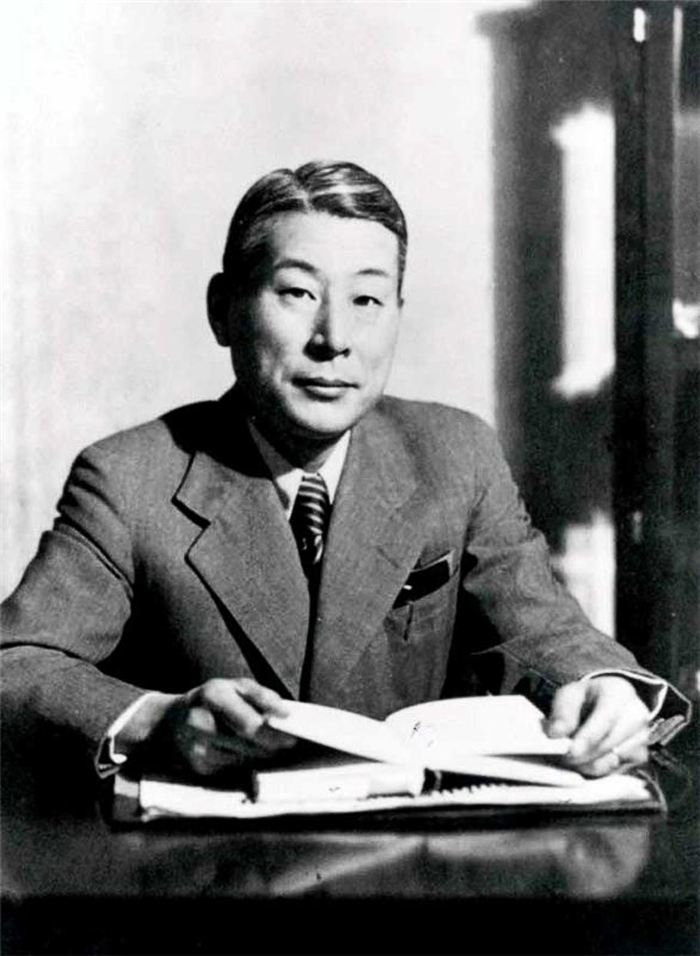
Chiune Sugihara: Life and Legacy

A Japanese Diplomat’s Daring Wartime Rescue of 6,000 Jews

https://upload.wikimedia.org/wikipedia/commons/e/e8/Sugihara_b.jpg

**Rights to all material herein are reserved. For inquiries, please write the author of this blog.** Continue reading

Burt Bacharach

  • Burt Bacharach

Burt Bacharach’s death isn’t really the end of an era since his era ended a long time ago. But his overall work with Hal David marked the last great contribution to the classic American songbook, and his catchy melodies and quirky rhythms made him one of the most distinctive composers of his day back when musical styles were going in a completely different direction. I remember wondering even at the time how “Close to You” became such a massive hit on normal rock stations, but I’m glad it did. I’ve written about him before in a West End show dedicated to his music, Close to You. I also recalled a concert he gave in Tokyo some years back and am reprinting my thoughts below. RIP.

Continue reading

A Look Back: A Kabuki Christmas Carol

Tis the season, so I thought I’d repost this script. The show had a successful run in Tokyo, the land of Kabuki, a few years back. Enjoy.

Sekenbanashi's avatarsekenbanashi

KCC logo

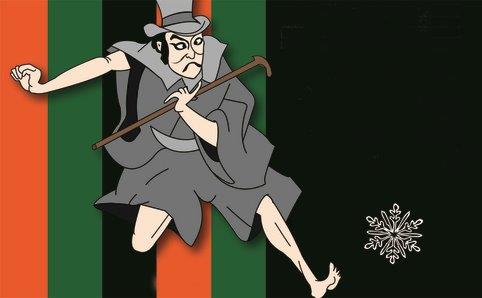
This is my Kabuki version of the Dickens classic reset in late 19th-century Japan. That setting is deliberate: Scrooge’s youth would be the Edo Era of samurai and shoguns; his present the Meiji Era, when Japan opened itself to the world; and his future the increasingly Westernized Late Meiji or Taisho Era, all visually very distinct periods. I originally wrote the show in Japanese for a Kabuki script competition by Japan’s National Theatre. That didn’t work out, but when a local English-language troupe took interest, I rewrote it in English. The show takes place on a Japanese New Year’s Eve, which shares many similarities with Christmas Eve in the West, but the producer insisted on retaining the “Christmas Carol” title for marketing purposes (the Japanese title is different). The production, performed in English by a multicultural cast at a central Tokyo theater, proved a huge success in a sellout run…

View original post 12,124 more words

Encores! revives itself

  • Encores! revives itself

6/16/22 (Thurs)

It’s a happy surprise to see that the City Center Encores! series has reversed course from its attempt to right the racist ways of the Broadway musical, returning to its original mission of presenting great theater. The three musicals chosen for next year, all worthy picks, are Jerry Herman’s notable flop Dear World (1969), the millennial operetta The Light in the Piazza (2005) and the British megahit Oliver! (1960).

Continue reading

NY Times: “That entrenched macho bias”

  • NY Times article: That entrenched macho bias

3/10/21 (Wed)

I came across this article that I wrote a year ago but never posted. It’s pretty funny rereading it, so I thought I’d throw it in now. This critic recently complained feverishly about unmasked West End audiences on a trip to the UK, where masking is not mandated. Talk about the ugly American. The NY Times is sounding more and more like the Babylon Bee.

—————————————————-

Someone needs to give Laura Collins-Hughes a real job. The NY Times critic wrote an article asking film stars to return to stages around the nation to get things hopping again, a fine sentiment, though I suspect it wouldn’t take that much to get people back to the theater; as Japan has found, demand for communal cultural events even amid the pandemic is a lot stronger than many people think, especially among younger audiences, as long as the product is attractive.

What grated was her notion of the supposed disdain that “this swaggering cowboy nation of ours” has for theater, including “an entrenched macho bias, bound up in misogyny and homophobia, that makes it hard for the industry to be taken seriously”. Anyone know what she’s talking about? Continue reading

Porgy and Bess (Met Live)

  • Porgy and Bess (Met Live)

9/22/20 (Tues), Tokyo

The Met Live film that had been broadcast abroad during its performance on February 1 finally arrived in Tokyo theaters this week. The production, the first at the Met in nearly 30 years, had received rapturous reviews and was sold out throughout the run. The production had debuted in London at the ENO in 2018, but they presumably had to expand it for the gigantic Met stage. I thought it would be bashed for cultural appropriation and its none-too-flattering portrayal of black life, but it seems to have been warmly welcomed this time, not least for the opportunity it provides to black singers. (The Met actually had to import a large portion of the chorus from elsewhere.) At any rate, it proved hugely popular and will presumably be around for a while as long as they can secure the main singers, which doesn’t seem to be a problem these days.

Continue reading

RIP Encores!

  • RIP Encores!

Politics appear to have claimed another scalp with New York City Center’s venerable Encores! series. The new artistic director Lear deBessonet, working with Clint Ramos in the curious new position of “producing creative director”, has decided that entertainment is not as important for modern audiences as relevance. In addition to “revivals of hidden gems” (no argument there), deBessonet says that the future of the series lies in “productions where artists reclaim work for our time through their own personal lens, and celebrations that look at the ways musical theater can connect us, in this city and across the country”. For next year, they have chosen two black-themed musicals, “The Life” and “The Tap Dance Kid”, dating respectively from 1997 and 1983 (a third show, to be drawn from a classic rather than forgotten musical, will be announced later). In other words, the point is not the music or even the quality of the work, but the subject matter.

I suppose they mean well with their personal lenses and connections, but did they really have to pick Encores! for this? Continue reading

A look back: Madame Butterfly (Nikikai)

(While this Japanese-directed production last year had its issues, it had its fans in Tokyo, and I was interested to see how it would fare overseas. Unfortunately its foreign debut in Dresden was cancelled due to the pandemic. I had written the article below for the international run, so I’m reprinting that here.)

The iconoclastic Japanese stage director Amon Miyamoto has a problem with Madame Butterfly. The stereotypical image of a spurned geisha? The sexual exploitation of a 15-year-old girl? A warped Western view of his country?

No, he feels that the opera mistreats the American.

That would be Pinkerton, the US naval lieutenant who purchases Butterfly’s temporary companionship for 100 yen, speaks blithely on their wedding day of one day taking a “real American wife,” leaves Japan almost immediately after marrying and impregnating her, and returns unannounced three years later with a new bride to retrieve his son and take him back to the US. He is typically portrayed as a villain, and it’s not hard to see why – the opera has even been criticized by some as anti-American.

Miyamoto, as usual, takes his own path in a co-production of the Semperoper Dresden, Tokyo Nikikai Opera, Royal Danish Theatre and San Francisco Opera that debuted in Tokyo in October. Continue reading