Gohatto (御法度)

  • 御法度 (Gohatto)

1/27/21 (Tues)

Oshima Nagisa’s fictional 1999 film conjures up a story of nanshoku (male-on-male sex) in the famed Shinsengumi samurai corps in 1865, just three years before the collapse of the shogunate. A certain amount of fooling around can be expected among samurai given the not-unknown phenomenon throughout Japanese history of male-on-male sex (not exactly homosexuality) as documented in novels, popular Kabuki plays and shunga prints. Within the Shinsengumi, at least as portrayed here, boy love was looked down upon not because of morals but from concerns over discipline and was basically ignored if held in check. The film is also known in English as Taboo, but something like Forbidden would be more accurate; gohatto literally means “against the law” or in this case “against the samurai code”. Putting historical figures like Hijikata Toshizo and Kondo Isami in this context seems unfair to their memories, but I guess that’s Hollywood (well, the Japanese equivalent).

Continue reading

An Inn in Tokyo (東京の宿)

  • 東京の宿 (An Inn in Tokyo)

2/20/21 (Sat)

A superior film. Ozu’s 1935 work is his last surviving silent film, made well into the sound era. The jobless Kihachi (a wonderful Sakamoto Takeshi) wanders around a barren landscape with his two young sons looking for work, often having to choose between dinner and shelter. The kids help out by catching dogs and turning them into the pound for a small reward. Kihachi eventually runs into an old friend (Iida Choko, also terrific) who helps find him a job. Kihachi then runs into a woman he had met at the shelter, who has a young daughter. He starts falling for the woman and helping as best he can. When the daughter becomes sick, he turns to stealing to help. In the end, he asks the old friend to take care of the children as he prepares to turn himself in. The friend is devastated at not lending him money earlier, not realizing his noble intentions. We see him at the end walking in the empty landscape, presumably toward the police.

Continue reading

Sound of the Mountain (山の音)

  • 山の音 (Sound of the Mountain)

1/16/21 (Sat)

Naruse’s bleak 1954 film about failed marriages, based on Kawabata’s novel. Continue reading

I Was Born, But… (生まれてはみたけれど)

  • 生まれてはみたけれど (I Was Born, But…)

11/19/20 (Thurs)

Ozu honed his craft in the silent era, and this 1932 film, coming at the tail end of that period, is one of the most lauded of all his works. Highly acclaimed from the start – it won the prestigious Kinema Junpo Award as the year’s Best Film – it remains a critical favorite.

Continue reading

A Balance (由宇子の天秤)

  • 由宇子の天秤 (A Balance)

9/25/21 (Sat), Tokyo

The second feature by 40-something director/writer Harumoto Yujiro. The English title is lame: the “balance” (tenbin) in the Japanese title (literally Yuko’s Tenbin) refers to a set of scales like those held by Lady Justice. Here, documentary filmmaker Yuko is forced to weigh her values when the tables turn on her and the subject becomes the prey.

Continue reading

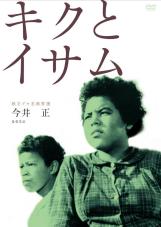
Kiku and Isamu (キクとイサム)

  • キクとイサム (Kiku and Isamu)

8/5/21 (Thurs)

Kiku and Isamu

Imai Tadashi’s 1959 film about two half-black siblings in a farming community at the foot of Mt. Bandai in Fukushima Prefecture. The film interestingly came out the same year as the highly successful remake of Imitation of Life and Cassavetes’ experimental Shadows, which both deal similarly with mixed-race or light-skinned blacks, as did that year’s Bunraku puppet drama 白いお地蔵さん (The White Buddha). Wonder if it was something in the air.

Continue reading

Funeral Parade of Roses (薔薇の葬列)

  • 薔薇の葬列 (Funeral Parade of Roses)

7/16/21 (Fri)

Matsumoto Toshio’s uncategorizable 1969 film about “gay boys”, a phrase used here mainly to refer to transvestites or male-to-female transgenders (the line isn’t clearly drawn). Having just seen John Cassavetes’ fragmented Shadows of ten years earlier, I thought I was ready for anything, but this psychedelic romp steps even further into the Twilight Zone. It’s drawn loosely from Oedipus Rex, which forms a framework of sorts, but that’s hardly the point in this house-of-mirrors experience.

The nominal story, set in contemporary Tokyo, revolves around the young and beautiful bar “hostess” Eddie (i.e., Oedipus – get it?), who is battling the bar’s aging kimono-clad Mama-san for the affections of an older gent. Eddie, whose long-absent father exists in his mind only as an old photo with the face burnt out, is haunted by memories of his mother laughing at his effeminate nature, beating him mercilessly after catching him putting on makeup, and screaming in horror as he stabs her to death when he finds her with a man (whom he also murders). Somehow he has found his way into Tokyo’s underground gay world, where he reigns as the most popular hostess at his bar among businessmen looking for a thrill. He ultimately wins the older gent, unwittingly causing the distraught Mama-san to commit suicide, and takes over the bar. Anyone familiar with Oedipus can see the rest coming, but it follows it more closely than I had imagined (too closely, to be honest) with one real shocker a la Buñuel in an expressionistic ending. Let’s just say that I’m glad the film’s in black-and-white.

Continue reading

Fires on the Plain (野火)

  • 野火 (Fires on the Plain)

7/11/21 (Sun)

Kon Ichikawa’s eye-opening 1959 film is a grim look at the actual lived experience of Japanese soldiers in WWII on the losing end of the battle in Leyte. There’s no glamour, heroism or dignity here as the desperate soldiers, pursued by the advancing Americans, escape through the forests and rough landscape toward a small coastal town on rumors of a possible rescue. Food is scarce and hope is scarcer as they scrounge to survive. They maintain military order on the surface, but their morals gradually break down as fatigue, starvation, injury and fear take their toll both physically and mentally. While the war itself is never shown, death is a constant presence, and the film has no compunction about showing rotten flesh, amputated limbs, filthy bodies covered in dirt and excrement, blood spurting or oozing from wounds, and other delights. It’s all a bit much after a while, and I started to become inured to the horrors, though maybe that was the point.

Continue reading

The Sun Tribe and the Dying Shogunate (幕末太陽傳)

  • 幕末太陽傳 (The Sun Tribe and the Dying Shogunate)

8/7/21 (Sat), 9:30-11:30p, home

Kawashima Yuzo’s 1957 star-studded farce, headed by comedian Frankie Sakai, was at one point rated by Japanese critics as the fourth greatest Japanese film ever made, right up there with Tokyo Story and The Seven Samurai – how’s that for a recommendation? I was suspicious given the slapstick nature of most Japanese comedy of those years, but curiosity eventually got the better of me. I’m glad it did.

The Japanese title, Bakumatsu Taiyoden, was rendered online as Sun in the Last Days of the Shogunate (I’ve switched that for my own title). In fact, “sun” here is a jokey reference to the so-called “Sun Tribe”, groups of nihilistic youth that featured so prominently in books and movies at the time. That was reinforced with the appearance of idol Ishihara Yujiro, who is playing essentially the same disaffected Sun Tribe youth role that propelled him to stardom a year earlier in the sensational Crazed Fruit. (That’s true as well for his tribal cohort, the tall half-Danish hunk Okada Masumi, whose exotic looks stand out in this period piece; a running joke has him repeatedly reassuring doubters that he is a Japanese born in Shinagawa.) Bakumatsu is a word used to describe the final years of the dying shogunate (bakufu), which the characters at the time of course wouldn’t have known was dying despite the evident signs in the air. The inn portrayed here is the actual location where Ishihara’s character plotted the 1863 burning of the British Embassy that is reenacted in the film’s climax. Having Ishihara in this historical role is like dressing James Dean in waistcoat and powdered wig and placing him at Valley Forge in “Yankee Without a Cause”. That suggested that the film would be a topical parody filled with inside jokes whose relevance has long since died out. That it succeeds nevertheless is a testament to the strength of the concept and writing.

Continue reading

My Sin: Sakubei’s Story (己が罪作兵衛)

  • 己が罪作兵衛 (My Sin: Sakubei’s Story)

6/19/21 (Sun), 内子座 (愛媛)

This affecting silent 20-minute drama of 1930 by Sasaki Tsunejiro is apparently all that is left of a much longer piece. It is a remake of a popular story but shifts the focus from the woman to the old fisherman after a hugely successful stage portrayal by Inoue Masao, who repeats his performance here. The story’s original title Onoga Tsumi (“My Sin”) was simply combined here with the fisherman’s name, Sakubei, which doesn’t make much sense given that he was blameless in the story. I guess they didn’t want to mess with a famous title. 

Continue reading

Youth of the Beast (野獣の青春)

  • 野獣の青春 (Youth of the Beast)

6/17/21 (Thurs)

This 1963 yakuza film was evidently the first to define Suzuki Seijun’s surreal style. It’s a fairly straightforward story for him, albeit intricately plotted. Jo (Shishido Jo – he seems to play Jo-named characters a lot), a lone-wolf gangster and former policeman, seeks to avenge the death of a former colleague by playing two gangs off against each other. The colleague had been found dead with a call girl in an apparent double suicide, including a suicide note allegedly written by the woman. Jo, however, suspects that the death was not self-inflicted. His violent search for the truth drives the film.

Continue reading