- The Palm Beach Story
4/5/21 (Mon)
A 1942 comedy by Preston Sturges. Continue reading
2/7/21 (Sun)
Scattered Clouds (also known as Two in the Shadow), Naruse’s last film, is a 1967 drama starring Hayama Yuzo and Tsukasa Yoko set in then-contemporary Tokyo. Continue reading
1/27/21 (Tues)
Oshima Nagisa’s fictional 1999 film conjures up a story of nanshoku (male-on-male sex) in the famed Shinsengumi samurai corps in 1865, just three years before the collapse of the shogunate. A certain amount of fooling around can be expected among samurai given the not-unknown phenomenon throughout Japanese history of male-on-male sex (not exactly homosexuality) as documented in novels, popular Kabuki plays and shunga prints. Within the Shinsengumi, at least as portrayed here, boy love was looked down upon not because of morals but from concerns over discipline and was basically ignored if held in check. The film is also known in English as Taboo, but something like Forbidden would be more accurate; gohatto literally means “against the law” or in this case “against the samurai code”. Putting historical figures like Hijikata Toshizo and Kondo Isami in this context seems unfair to their memories, but I guess that’s Hollywood (well, the Japanese equivalent).
2/12/22 (Sat)
I was equally excited by and wary of the idea of a new film version of West Side Story (see here). The 1961 film, as with the original stage show four years earlier, was portraying contemporary events by people who were there. Any remake would necessarily involve a reinterpretation of the story filtered through a modern sensibility, and it was hardly a comfort that it was being led by the ever-woke team of director Steven Spielberg and screenwriter Tony Kushner. The original show, which portrays a turf war between Polish-American and Puerto Rican social outcasts, has been criticized by some as an outmoded, semi-racist piece by four Jewish white guys (choreographer, writer, composer, lyricist), though you could also say four gay guys if that helps. The last Broadway revival in 2020, which I did not see, was reportedly an extreme makeover with a distinctly modern perspective, including references to Black Lives Matters, extensive use of video screens, and modern dance in place of Jerome Robbins’ iconic ballet-inspired choreography. That closed quickly due to the pandemic but did not subsequently reopen, suggesting that the producers didn’t have much confidence in its commercial prospects. It was hard to say what to expect with Spielberg, though the previews encouragingly looked like a more traditional approach.
2/19/22 (Sat)
Otto Preminger’s 1954 film was based on Oscar Hammerstein II’s transformation of Carmen into an all-black Broadway musical that had enjoyed a healthy run back in 1943 (just after the opening of his blockbuster Oklahoma!). He had reset the show from a tobacco factory in 19th-century Seville to a Chicago parachute factory during WWII, with the story otherwise closely paralleling the original in an adept English translation. A fabulous off Broadway production in 2018 ended far too soon without transferring, which is Broadway’s loss, but it did demonstrate that the material (other than its unfortunate “black” vernacular, which can easily be stripped away) remains vital today. I wish the Encores! series had chosen this as their black-oriented piece in this year’s lineup instead of the vastly inferior Tap Dance Kid and The Life. How great would it be to hear Bizet’s score in this Americanized setting with the full Encores orchestra?
Preminger did not simply re-stage the musical but substantially rewrote the book, eliminating a good deal of the music along the way in apparent hope of creating a drama with occasional music as opposed to a musical. Not sure he succeeded at that, but he did a terrific job of making the material work for the screen. Continue reading
2/20/21 (Sat)
A superior film. Ozu’s 1935 work is his last surviving silent film, made well into the sound era. The jobless Kihachi (a wonderful Sakamoto Takeshi) wanders around a barren landscape with his two young sons looking for work, often having to choose between dinner and shelter. The kids help out by catching dogs and turning them into the pound for a small reward. Kihachi eventually runs into an old friend (Iida Choko, also terrific) who helps find him a job. Kihachi then runs into a woman he had met at the shelter, who has a young daughter. He starts falling for the woman and helping as best he can. When the daughter becomes sick, he turns to stealing to help. In the end, he asks the old friend to take care of the children as he prepares to turn himself in. The friend is devastated at not lending him money earlier, not realizing his noble intentions. We see him at the end walking in the empty landscape, presumably toward the police.
1/16/21 (Sat)
Naruse’s bleak 1954 film about failed marriages, based on Kawabata’s novel. Continue reading
11/19/20 (Thurs)
Ozu honed his craft in the silent era, and this 1932 film, coming at the tail end of that period, is one of the most lauded of all his works. Highly acclaimed from the start – it won the prestigious Kinema Junpo Award as the year’s Best Film – it remains a critical favorite.
9/25/21 (Sat), Tokyo
The second feature by 40-something director/writer Harumoto Yujiro. The English title is lame: the “balance” (tenbin) in the Japanese title (literally Yuko’s Tenbin) refers to a set of scales like those held by Lady Justice. Here, documentary filmmaker Yuko is forced to weigh her values when the tables turn on her and the subject becomes the prey.
8/5/21 (Thurs)
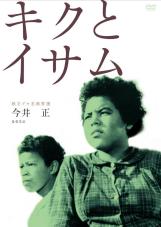
Imai Tadashi’s 1959 film about two half-black siblings in a farming community at the foot of Mt. Bandai in Fukushima Prefecture. The film interestingly came out the same year as the highly successful remake of Imitation of Life and Cassavetes’ experimental Shadows, which both deal similarly with mixed-race or light-skinned blacks, as did that year’s Bunraku puppet drama 白いお地蔵さん (The White Buddha). Wonder if it was something in the air.
8/24/21 (Tues)
Andrzej Wajda’s 1958 film is apparently the third in an unplanned trilogy about wartime Poland. The story takes place over the course of the day of victory over Germany, but no one is celebrating amid the uncertainty over the country’s future as it simply moves into the hands of the Soviets. Maciek is a young resistance fighter who’s still resisting, more out of habit than closely held belief. He’s ordered to kill a Communist leader, a task he seems blankly to accept. He lolls around lazily on the grass waiting for his prey, then casually kills the approaching persons only to discover that he’s murdered two innocent men who happened upon the scene. This sets off a Hamlet-like crisis of confidence regarding the endless cycle of violence for questionable goals. His turmoil is exacerbated when he falls in love with a young barmaid, making him question his entire values. In addition, the target of his plot, though a Communist official, has returned from fighting in Spain and is not unsympathetic himself (maybe inevitably, given that the film was made under Communist rule). In the end, he feels bound to his lost cause and kills the official, who falls into his arms in a symbiotic moment of two characters caught in their own unforgiving philosophies. Maciek escapes but is hunted down and shot, and our last image is him dying in fetal position on a garbage heap in a huge field.
Maciek’s crisis is very much that of Poland, which, in going seamlessly from one dictatorial regime to another, must have wondered what all the fighting and dying was about. Continue reading
8/9/21 (Mon)
Ichikawa Kon’s 1960 film. Sentimental schlock based on a novel by Koda Aya. Koda also wrote Flowing (流れる), the source for one of my all-time favorite films. No such luck here. Continue reading

