A Japanese Diplomat’s Daring Wartime Rescue of 6,000 Jews
**Rights to all material herein are reserved. For inquiries, please write the author of this blog.**
Europe and Japan in 1939
The political situation in Europe in summer 1939 was becoming increasingly fraught. Nazi Germany had only grown more aggressive after the passive acceptance of its occupation of Austria and the Sudetenland area of Czechoslovakia the previous year, and swallowed up the remainder of Czechoslovakia in March. This prompted Britain and France to provide explicit guarantees to vulnerable Poland and begin joint military training. Britain introduced peacetime conscription for the first time in its history. Governments and the public alike were desperate to avoid conflict amid the lingering trauma of the Great War, “the War to End All Wars”, just two decades earlier, but events were barreling on at their own momentum.
German Jews had come under escalating pressure since Hitler’s ascension to power six years earlier, and the scope of the harassment was widening with Germany’s takeover of other nations. Persecution was giving way to outright violence in the aftermath of the Kristallnacht (Night of Broken Glass) pogroms throughout the expanding German empire the preceding November. At the same time, citizens were being sent en masse to interment camps in the beginnings of what would become known as the Holocaust.
The picture from Asia was quite different. Japan, which had long before colonized Korea, Taiwan and Manchuria (northeastern China), was already at war in a full-scale military conflict with China that had begun in 1937. That is, Japan’s “World War II” was distinct from the one soon to take hold in the West.
Its interest in faraway Europe was dictated largely by its complex relations with the Soviet Union. Japan had occupied southern Sakhalin and the Kuril Islands since its shocking defeat of Czarist Russia in 1905, and tensions had heightened with its establishment of a puppet state in Manchuria on the Soviet border in 1932. The nations fought an undeclared border war thereafter for much of the decade. This prompted a wary Tokyo to ally itself with Germany through an anticommunist treaty known as the Anti-Comintern Pact in 1936. The aim was to keep the Soviets engaged on both its European and Asian fronts, giving Tokyo greater flexibility in its own military strategy. Resource-hungry Japan had its eyes on Siberia at one point, but an incursion into Soviet-held territory in 1939 known as the Nomonhan Incident, the decisive clash in a series of battles along the Khalkhin River, had ended disastrously for Japan, including substantial loss of life. This essentially put paid to the border dispute. Japan then turned its attention to Southeast Asia and the South Pacific, a decision that would have far-reaching consequences.
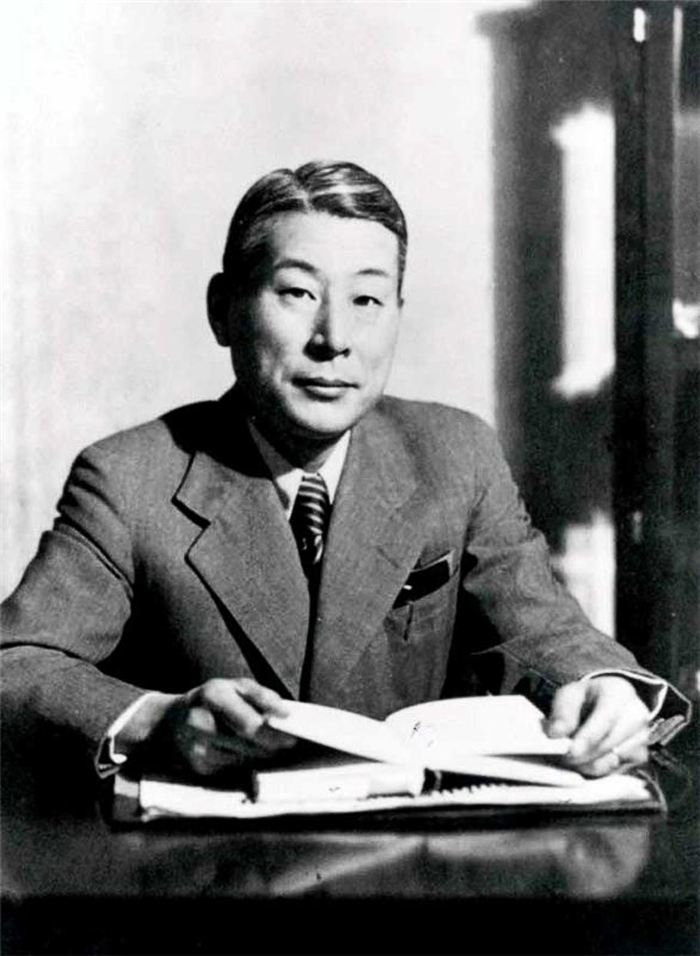
Still, given its strategic aims and the deteriorating state of European affairs, Japan wanted to keep a close eye on both German and Soviet activity. It knew precisely where to turn: a young diplomat stationed in Finland named Chiune Sugihara.
Road to diplomacy
Sugihara, born on January 1, 1900, hailed from the small town of Yaotsu in central Japan. He had joined the foreign service on something of a fluke: direly poor as an English student at prestigious Waseda University – he had been cut off by his family after refusing his father’s orders to go to medical school, a resistance to authority that would characterize his life – he happened upon an offer by the foreign ministry of a full scholarship for overseas study. With minimal time, he managed to pass the difficult exam and joined the government in 1920.
The ministry ignored his request to study Spanish and assigned him to Russian. It sent him to Japanese-occupied Harbin, a Manchurian town on the Russian border. After three years of intensive study (including one year of military service), he was given a job in the Russian department of the Japanese consulate. His status was upgraded to embassy staff after Japan officially absorbed Manchuria. His stock rose rapidly with his decisive contribution in negotiations with the Soviet Union over the rights for the Northern Manchuria Railway, when information he surreptitiously procured from inside sources helped browbeat the Russians down to one-third the asking price.
Unhappy with the bullying ways of the Japanese military in China, he requested and was granted a transfer back to Japan, where he married and settled down. However, the ministry wanted him in Europe and soon assigned him to the Japanese embassy in Moscow. That appointment was unexpectedly rejected by the Soviet Union, which, presumably mindful of Sugihara’s role in the railway talks, was suspicious of his motives and declared him persona non grata. (Sugihara also cites Soviet unhappiness with his “very close relationship” – brief marriage, in fact – to a White Russian, referring to the anticommunist force that had been defeated by the Bolsheviks within living memory.) The ministry thus sent him instead to neighboring Helsinki in 1937. While his official title was interpreter, his position gave him an ideal opportunity to keep track of the Soviets. The Soviet Union refused to grant him even a transit visa, so Sugihara had to sail to Helsinki via the United States.
It was two productive years later when his superiors sought him out for Lithuania. He was given a promotion, tasked with opening and heading a consulate in Kaunas. The request would appear strange on the surface. Japan had neither significant commercial interests in Lithuania nor citizens needing consular services. Moreover, Sugihara was the only Japanese employee assigned to the consulate, with just a few local hires as assistants. In fact, Sugihara revealed later that his key mission was to determine when and if Germany would attack the Soviet Union, an event that would affect Japan’s own military strategy and troop placement in the Far East. That is, Sugihara, who was fluent in both Russian and German (along with several other languages), was serving in the ministry essentially as Japanese intelligence.
Just when he was taking up his post came the shocking news on August 23 that Germany and the Soviet Union had signed a non-aggression pact. Japan had received no indication from its nominal ally Germany that such a move was in the offing. Tokyo had allied with Berlin in the first place based on their mutual antipathy toward the Soviet Union, and the latest development threw Japanese diplomacy off course. This foreign policy debacle triggered the immediate recall of the Japanese ambassador to Germany and ultimately the wholesale collapse of the Japanese government, with the outgoing prime minister characterizing the situation in Europe as “complex and mystifying”.
On September 1, Germany invaded Poland. Britain and France immediately declared war, marking the outbreak of World War II. Japan could do little in Europe but monitor developments. Poland was then taken over from the east by the Soviet Union on September 17 in accordance with a secret clause in the non-aggression pact, thus disappearing from the world map as an independent nation.
The advent of the Nazis posed a grim threat to Poland’s Jewish community, the largest in Europe. Polish Jews turned desperately anywhere they could to escape. Vilnius, a key Jewish center that was historically the capital of Lithuania, was under Polish control at that time and became a key destination for the refugees. After occupying eastern Poland, the Soviet Union returned that city to Lithuania, meaning that Jews there were now in politically neutral territory.
Germany aggressively expanded its attacks in April 1940 and took over Denmark, Norway, the Netherlands, Belgium and Luxembourg in quick succession. By June, even France had been lost to the Nazis. Circumstances for the Jews in Europe became critical.[1] The situation sparked uncountable waves of refugees, and Jews in Lithuania moved quickly to acquire visas in order to get out.
Meanwhile, Sugihara continued dutifully to watch events from his post. His children recalled numerous enjoyable family drives and picnics along the coast, only to learn years later that their father was using these as sly opportunities to observe ship movements, estimating the displacement of the ships as a means of gauging weapon and troop transfers. He also had extensive contact with the Polish underground, which provided useful information on the Germans (meaning Tokyo was effectively spying on its ally) and the Soviets. He actually reported to Tokyo several months prior to the event that the Germans were preparing to invade the Soviet Union, but his superiors dismissed this in the conviction that the real target was England. Sugihara must have been aware of the many refugees who had flooded into the city in that turbulent period, but his interests were elsewhere in line with his country’s needs.
The Soviet Union had stationed its troops in Lithuania in June 1940 in exchange for having returned Vilnius and surrounding areas. A pro-Soviet regime was elected in a rigged vote the next month, and the country was fully absorbed shortly thereafter by the Soviets. As Kaunas was no longer the capital of an independent nation, Moscow ordered all foreign missions in the city to pull out by the end of August, and embassies and consulates were shutting down one after another. With this lifeline closing, the options for the terrified refugees were rapidly narrowing. Western Europe was under German control, Sweden and Turkey were uncooperative, and the British had placed limits on Palestinian immigration. It was then that the refugees set their sights on Japan.
Sugihara: The decision
Sugihara had been ordered by the Soviets to close the embassy by August 25. Preoccupied with those preparations, German troop movements and Soviet machinations in Lithuania, the unsuspecting consul woke up on July 18, 1940, “a day I can never forget”, to the following scene.
It was very cloudy, a typical day in northern European countries along the Baltic Sea in the fleeting summer months of June and July. Just before 6:00 a.m., I suddenly heard loud voices from crowds gathering outside the bedroom of the official consul residence, which faced the main street. The indecipherable voices grew louder as the number of people swelled. I rushed to the window to peek through the curtains. I was shocked to see a crowd of roughly 100 people – old and young, men and women, the majority dressed in ragged clothing – leaning against the fence around the residence. They were facing the consulate and appeared to be pleading for something.
He learned from the consulate staff that these were Jewish refugees who had fled western Poland to escape the Nazis. They had come to the consulate seeking transit visas that would allow them to cross the Soviet Union to Japan, from where they could then move on to a third country. The crowd was expected to grow to several thousand in the coming days as word was already spreading rapidly of this final hope. “People looked frightened and even desperate,” remembered Yukiko. “Some of them were climbing over the gate. It was chaotic.” She said that officers from the consulate had to push them away several times.
Taken aback, Sugihara asked that five representatives be chosen to speak on behalf of the group. Gathering inside the consulate, those persons revealed that the refugees had obtained visas from the Dutch consul to a distant Caribbean island called Curaçao (about which more below) but that the Soviets would not grant exit visas on this basis. They thus begged for permission to transit through Japan. They laid out their proposal methodically.
Sugihara listened carefully for nearly two hours as they recounted the hardships of their journey from Poland and the existential crisis they faced. Moved by their plight, he told them that he was extremely sympathetic and would do his best. While transit visas could normally be issued by the consul without prior approval from the ministry, he knew that he would have to contact Tokyo in this case for security reasons because of the large number of people involved. Additionally, transit visas required that the applicant have a valid passport, a visa to a third country and sufficient funds, but Sugihara was aware that few of those before him could meet these conditions – indeed, some could not satisfy any. He notified them as well of the consulate’s impending closure the following month. Nevertheless, he promised them that he would deal with the matter right away, adding that it would take 3-4 days for an answer from Tokyo.
He swiftly cabled the Foreign Ministry. Explaining the situation, he said that the rejection of visas would be wrong on humanitarian grounds and sought permission to issue the visas on his own discretion even if the refugees did not meet the formal protocol. He suggested giving applicants 50 days to procure third-country visas, estimating that they would need 20 days to cross the Soviet Union and 30 days residence in Japan. The ministry rejected this proposal and ordered exact adherence to the regulations.
The ministry’s caution was not entirely illogical. It cannot have relished the prospect of several thousand refugees suddenly arriving on Japanese shores without proper vetting or sufficient funds, all requiring housing, food, medical care and such with no clear way out. Moreover, most of the refugees were escaping from western Poland, an area occupied by an allied nation. Ministry officials did not have the insight that Sugihara was able to gain from personal on-the-ground contact. Of course, that is why officials are appointed to local areas in the first place, and the ministry would have done well to listen. Nevertheless, its motives should not be categorized as malevolent.
It should also be noted that the Japanese government, despite allying with Germany, had explicitly refused Nazi demands to expel or mistreat Jewish residents from Japan and areas under its control. This was tied partly to exaggerated notions of Jewish influence in global finance and business but also to a genuine repugnance for Germany’s abuse of its own citizens. At one point, several top Japanese military figures and diplomats drew up a scheme to provide a home for tens of thousands of German Jews in Manchuria in hopes of winning support from American Jewry, though this effort was ultimately abandoned. In addition, a special council known as the Five Ministers Conference, consisting of the prime minister, foreign minister, finance minister and army and navy ministers, declared outright in 1938 that Jews were to be treated like all other foreigners.[2] While the military and foreign ministry did clash over the extent to which German sensibilities needed to be considered, there was no question of work camps or concentration camps or other harsh measures, even under heavy direct pressure by Gestapo chief Colonel Josef Meisinger, who had been assigned to the Far East. The denial of Sugihara’s request stemmed not from religion or ethnicity but from a staunchly rule-bound bureaucratic mindset.
Sugihara tried again on at least two other occasions. He stressed that the rapid closure of other foreign missions left the refugees nowhere else to turn, only to be told that the arrival of large groups was opposed not only by authorities in Japan but by shipping companies in the port cities of Vladivostok and Tsuruga on security grounds. The orders were clear.
Sugihara was left with a stark choice. Years of devoted work had taken him from a destitute student life to the cream of international society, and he could reasonably expect a long stable career in diplomatic service with the possibility of ambassadorships or other promotions. He also had a wife and three children to care for, including an infant born in Kaunas just several months earlier. He had certainly not been sent to Kaunas to issue visas, and the situation could by no means be called his responsibility. Yet he was haunted by the desperate people before him. He recalls his mental state in his memoirs.
I thought about this long and hard. The applicants were totally unknown to me. If I wished, I could just inform the five representatives that the visas were rejected, seal the door of the consulate, and slip into a hotel. This would be physically possible, and I would win praise from the ministry as a diligent servant of the state. I thought long and hard. If it were anyone else other than me, I suppose 100% would have taken the easy path and turned down the applications. Why? There are official rules for the conduct of officers, and there was a real fear that failure to follow the orders could be grounds for denial of further promotion or outright dismissal for violation of some clause or other.
I agonized over the decision all night. I had no one to talk to but my family. . .
After much struggle, I ultimately reached the conclusion that humanity and compassion come first. With my wife’s agreement, I faithfully executed this mission.
Thus determined, Sugihara set immediately to work. He negotiated with the Soviet government to allow refugees with Japanese transit visas to cross its territory via the Trans-Siberian Express, albeit at several times the normal price. Though he had issued a trickle of visas for specific cases since July 26, he accelerated the pace considerably on July 29. He worked intently for 16-18 hours a day to process as many refugees as possible ahead of the consulate’s looming closure. The extended clause for the transit visas had to be written manually, and he forged ahead as the number grew from dozens to hundreds to thousands. He initially numbered the applications but abandoned that when the number reached 1,000, and later stopped collecting the application fees as well. His hands grew callused and had to be massaged each night by his wife Yukiko. (Yukiko, who had helped her husband with administrative work on occasion, recalled years later that she was purposely kept out of the action this time in case of any trouble with the Nazis.)
While the Japanese text had to be handled by Sugihara himself, his secretary Wolfgang Gudze, a Lithuanian of German ethnicity, aided in processing the visas, creating the odd sight of an ethnic German helping Jews escape the Nazis. (Some accounts allege that Gudze was a Gestapo spy, but that has never been substantiated.) Moshe Zupnik, a yeshiva student in Kaunas, also worked as a volunteer alongside Gudze at one point to speed up the process.
Sugihara did his best to satisfy the formalities of the entrance requirements in order to maintain the visas’ validity. Most crucial was the role of the aforementioned “Curaçao visas” issued by Jan Zwartendijk, a Dutch businessman working for the electronics firm Philips in Kaunas who was serving part-time as acting consul of the Netherlands. He was one of the five representatives who negotiated on behalf of the refugees on that first fateful day. The Curaçao visas stated that visas were not required for entry into the Dutch Caribbean colonies of Curaçao and Surinam, which was superficially true; they tactfully omitted that permission would in fact be needed from local authorities. The ruse was devised by a Dutch-born Polish Jew, Peppy Sternheim Lewin, who had convinced Zwartendijk’s superior in Latvia, L.P.J. de Dekker, ambassador to the Baltic states, to issue her a visa with the modified text. Zwartendijk thus did the same for Lewin’s relatives, and word quickly spread among the Jewish population. This ploy allowed Sugihara to meet the letter of the law by including these islands as a nominal final destination, as the refugees had proposed; indeed, without the Curaçao visas, Sugihara’s efforts may have been in vain.
Zwartendijk issued over 2,300 visas with the help of assistants in an extraordinarily brief period from July 24 to August 3, when the Dutch consulate was forced by the Soviets to shut down. He acted at tremendous risk to himself and his family, including possible execution, given the Nazi occupation of his country. He destroyed all related documents before abandoning the consulate and was known by the refugees only as “Mr. Radio Philips” (later as the “Angel of Curaçao”), which may account for his relative obscurity. (Even Sugihara was unable to remember Zwartendijk’s name in his memoirs, referring only to the “honorary consul of the Netherlands” while misidentifying him as a Jewish Lithuanian businessman.) The Dutch government reprimanded him at the time for overstepping his bounds and only apologized for its “inappropriate” response in 2018. His courageous deeds, which deserve greater recognition, earned him posthumous designation by the Yad Vashem Holocaust Remembrance Center as Righteous Among the Nations in 1997.
Sugihara persisted even as the ministry cabled its objections. He fended off inquiries with evasions and questions about specific cases without mentioning that he was still writing vast numbers of transit visas. Surviving cables include requests for permission to issue visas for a Czech family under a special exception for “useful persons” and to a Polish industrialist whose wife and child had received US entry visas but had yet to receive his own when the US Embassy shut down. Sugihara was rebuffed on both occasions but issued the visas anyway.
As waves of refugees began to arrive in Japan with the Sugihara visas, the ministry cabled the consul repeatedly with orders that the foreigner entry law be respected. He was also cautioned by authorities in Vladivostok that the ships to Japan had limited room and that passengers were having to sleep perilously on the deck. This did nothing to dissuade Sugihara, who continued to process the refugees at a furious pace, stating years later that he did not recall refusing anyone.
Sugihara delayed as long as possible the closure of the Japanese consulate, making it one of the last of the foreign missions in Kaunas to pull out. When he was finally compelled to leave, he posted a note saying that he could be found at the Hotel Metropolis, where he continued the work. Having already sent the official seal needed for formal transit visas to Berlin, he issued transit permits, which could be done simply with his signature as consul. He persevered even at the train station in Kaunas when he had to leave for Berlin on September 4, including some permits signed literally from the train window. As he departed, he felt compelled to apologize to those he was unable to help.
The list subsequently compiled by Sugihara for the foreign ministry shows that he issued 2,139 transit visas and permits in Kaunas. That list, however, does not appear to be comprehensive; as noted, Sugihara dispensed with many administrative measures in his rush to issue the visas and stopped listing the names at a certain point. (Several entries on the list appear to be recorded twice, so the actual number is not clear. In addition, there was a separate “special list” that includes visas given to persons connected with the Polish government-in-exile.) Research by Yad Vashem finds that up to 3,500 visas may have been issued. As these covered entire families, the total number of those saved has been estimated at over 6,000 persons. It is known as well that Polish intelligence, which had made a rubber stamp for Sugihara in Kaunas to facilitate the visa process, secretly created a copy for itself and used this to issue counterfeit visas after Sugihara’s departure. Thus, in a broad sense, the Sugihara visas can be said to have rescued a good deal more than the official numbers.
It should be noted that the 6,000 survivors represented only a fraction of the 200,000 Jews living in Lithuania at the time. In particular, Lithuanian citizens who received visas but did not get out in time became Soviet citizens once the country was taken over and were no longer able to leave. Around 95% of the Jews remaining in the nation perished once the Nazis invaded and occupied the country in June 1941.
After Kaunas — Survivors
The refugees had cleared one major hurdle, but their ordeal had not ended. Most made the stressful trip across the Soviet Union via the Trans-Siberian Railway, enduring bureaucratic difficulties in Moscow and incidents of thievery and other unpleasantries on the train.
Worse, upon finally arriving in the port city of Vladivostok, they learned that the Japanese acting consul, Saburo Nei, was under strict orders by the Foreign Ministry to refuse passage specifically to those granted visas by Sugihara unless they met the formal criteria. Nei recalled later the acute pressure he felt at the time. Obeying the order would have left the refugees stranded in the Soviet Union, putting them at risk of deportation back to Nazi-controlled Europe. Nei, who was as it happened a junior schoolmate of Sugihara, reasoned finally that the visas were issued by a minister of the state and were thus valid. He allowed the relieved refugees to board the ship to Tsuruga, Japan.
In one case, a group of thirty people all showed up in Tsuruga with visas using the name “Jakub Goldberg”. They were sent back by incensed Japanese officials to the Soviet Union, which refused to accept them as they no longer had valid entry visas. They sailed aimlessly for some weeks before they were finally allowed into Japan.
The Japan National Tourist Organization provided vital help in seeing that the visa holders were transported safely to Japan. Once in Tsuruga, the refugees were met by the Polish Committee to Aid War Victims, a group organized by Polish Ambassador Tadeusz Romer and chaired by his wife Zofia. Romer had arrived in Japan in 1937 and stayed after the outbreak of war as representative of the Polish Government-in-Exile. As the majority of the Sugihara refugees were Polish citizens, Romer worked tirelessly to secure them shelter and welfare and issue passports or other official documents to the many who did not have them.
The refugees were assisted as well by the established Jewish community and the Japanese public, who were unsparing in their efforts to locate accommodations, offer the use of public baths and otherwise ensure their comfort. A substantial amount of critical cash was provided by the American Jewish Joint Distribution Committee. The Jews mainly went to Kobe and Yokohama, which had the nation’s greatest number of Jewish residents, as they waited for their third-country visas to go through.
The refugees soon faced another peril: their transit visas were only for ten days, which proved insufficient to secure permission to move on to third countries. Romer was able to intervene in some cases, but the bulk remained at serious risk of deportation back to Nazi territory given the watchful eyes of Japanese police and the by-the-book stance of the Foreign Ministry.
The Jewish community in Kobe called in despair to Setsuzo Kotsuji, the son of a Shinto priest who had improbably become a scholar of Hebrew and Judaism. Kotsuji poured himself immediately into the task. He lobbied the Foreign Ministry and local authorities in Kobe through repeated visits and extensive wining and dining on money borrowed from his family, successfully winning visa extensions of up to six months. In addition, as a fluent Hebrew speaker, he served as frequent mediator between the Jews and police.
Nearly all of the Sugihara survivors were helped by Kotsuji at some point in their journey, and certainly their fate may have been entirely different without his invaluable aid. Kotsuji’s activities earned him the suspicion of the military police, leading him eventually to flee to Manchuria, where he laid low until the end of the war. He returned to Japan after the war and later converted to Judaism. He died in Japan in 1973 but was buried at his request in Israel, transported from Japan by a military jet commissioned by the Israeli government. He remains better known in Israel than in his home country.
Most of the refugees traveled to Western nations, though a good number went during the war to Japanese-controlled Shanghai, which had a long-standing Jewish community. Those saved by Sugihara included many who became highly prominent in their fields, encompassing government ministers and world leaders in business and academia. Mir Yeshiva, now the largest yeshiva school in the world, was saved in its entirety by the Sugihara visas, the only European yeshiva to have come through the war intact. Descendants of the Sugihara survivors worldwide are presently estimated at up to 250,000 persons. Leo Melamed, a Sugihara survivor who became an immensely influential global financier, says that the incident proved to him that “one man can change the world”.
A final note: No one among the thousands of refugees is known to have gone to Curaçao.
After Kaunas — Sugihara
With the war in Europe in full swing, Chiune was not challenged at the time about his actions in Kaunas. Yukiko remarked in her memoirs, “I personally believe that the army [which then controlled the government] and the foreign ministry chose, for the time being, to ignore Chiune’s opposition of its orders. The army’s need for his contributions as Consul far surpassed the need to take disciplinary action against him.” The government may have also been preoccupied by finalization of talks over the Tripartite Alliance with Germany and Italy, which was signed just a few weeks later on September 27.
After a brief time in Berlin, Sugihara served six months in Prague in German-controlled Czechoslovakia before being sent to open a consulate in the quiet eastern German city of Königsberg (now Kaliningrad, Russia), where he continued his intelligence activities. He was ejected after a year and a half by the Germans, who were mistrustful of Sugihara’s motives, particularly his connections with Polish operatives. He was then transferred to Romania in autumn 1942 to serve as first interpreter at the Japanese legation in Bucharest. The family remained here until the end of the war. This proved his last diplomatic posting.
After Japan’s surrender on 15 August 1945, the Sugihara family was taken captive by the Soviets and held for a year and a half, under relatively benign conditions, in a Soviet prisoner-of-war camp. The family eventually traveled via the Trans-Siberian Railway to Vladivostok – ironically the same route as the Jewish refugees – finally returning to Fukuoka, Japan in early April 1947, a decade after they had last seen their country.
Upon his return, Sugihara was asked by the Foreign Ministry to “request retirement” as part of a major postwar retrenchment under American watch. The reason that Sugihara was chosen is unclear; he had been highly regarded, receiving the Order of the Sacred Treasure, Gold and Silver Rays several years earlier for his services. Yukiko recalls that her husband was asked to take responsibility for “that incident”, and Sugihara suggests in his memoirs that his direct betrayal of orders was a key factor behind his dismissal. It is indeed strange that the ministry should have been willing to part with a seasoned diplomat and fluent Russian speaker with such singular experience in Russian affairs given Japan’s complicated relations with its neighbor. (The nations had yet to conclude a peace treaty well into the 21st century.)
In any event, this marked the end of Sugihara’s diplomatic career. Sugihara stoically accepted the decision and received a small pension equivalent to the pre-war allowance, hardly adequate given the starkly higher cost of living. Yukiko later wrote bitterly of rumors circulating within the ministry that Sugihara had taken money from the Jews in exchange for the visas, which were vicious and untrue – in fact, the family was nearly penniless. Sugihara eventually cut off all ties with his former colleagues.
Work was not easy to find for a 47-year-old with no job experience. After a stretch selling light bulbs door-to-door, Sugihara took advantage of his language skills to land odd jobs such as manager of a US military PX (brushing off his wife’s objections to working “for one’s conqueror”), interpreter and English teacher. Still, the family struggled financially. Finally, at age 60, he secured a job with a trading company based in Moscow. He lived a lonely and solitary life apart from his family other than brief home leaves for 17 years until his retirement.
Sugihara’s deeds in Kaunas remained unknown for many years. Neither Sugihara nor his wife spoke of this part of their lives, even to their own children. One reason was the sudden death of their third son from leukemia shortly after their return to Japan. The child, Haruki, had been born in Lithuania, and the traumatic loss made that memory too difficult to bear. (Yukiko’s memoirs, written over three decades later, were dedicated in part to Haruki, “whom I think of every day”.) In addition, as he made clear in later statements, Sugihara felt that going against official orders was nothing to celebrate and, beyond that, never thought of his actions as anything special. He knew nothing of the subsequent fate of the refugees and concentrated solely on making a life for himself and his family.
Curiosity eventually prompted Sugihara to approach the Israeli Embassy during one of his semiannual home leaves and ask for information on the refugees after their arrival in Japan. As Israel did not even exist when those events were being played out, the staff was unable to help. Sugihara left his contact information in case of any leads.
In August 1968, he was unexpectedly called to the Israeli Embassy on a visit back to Japan. He was greeted there by Joshua Nishri, Israel’s economic attaché in Tokyo. Nishri approached him in tears, holding a passport with a weathered visa and thanking him profusely. Sugihara, seeing his own signature on the visa, realized that the man was not only one of the Kaunas refugees but one of the five representatives who had met with him on that first day. “Mr. Sugihara,” he later recounted Nishri saying, “we have never forgotten you.” Sugihara learned to his surprise that the survivors had been seeking him for years: his departure from the foreign service and long absence from Tokyo had made him impossible to locate, especially since they only knew him by his nickname Sempo.[3]
Word soon spread to other survivors. He was invited to Israel the following year and welcomed personally by Minister of Religious Affairs Zerach Warheftig – himself one of the five representatives who negotiated with Sugihara in Kaunas and a key organizer of the refugees at that time. Accolades came in quickly thereafter, including major awards from the Polish, Lithuanian, Canadian and US governments. He was named Righteous Among the Nations, Israel’s highest honor, by Yad Vashem in Jerusalem in 1985, a designation by the Israeli government in gratitude of non-Jews who took risks to save Jews during the Holocaust. Of the nearly 27,000 recipients, Sugihara is the only Japanese.
Sugihara died peacefully a year later on July 31, 1986 at his home in Kamakura.
The one key nation whose accolades Sugihara never lived to see was Japan. There was a feeling within the Foreign Ministry that as Sugihara had resigned in a post-war downsizing and not fired, the government had no reason to apologize.
The reversal began when Parliamentary Vice Minister for Foreign Affairs Muneo Suzuki went to establish diplomatic relations with newly independent Lithuania in 1991 following the collapse of the Soviet Union. Recalling Sugihara, Suzuki was aware of the diplomat’s reputation in the rest of the world and found credible the family’s contention that the resignation from the Foreign Ministry was not entirely voluntary. Above all, he thought it wrong that the ministry did not properly acknowledge the diplomat’s virtuous intent regardless of the circumstances of the resignation. He thus sought to clear Sugihara’s name. He invited Sugihara’s widow Yukiko to a ceremony in Tokyo that same year and apologized for the ministry’s treatment.
Sugihara was at last officially acclaimed for his actions by the Japanese government on October 10, 2000, the 100th anniversary of the year of his birth, with the unveiling of a plaque at the Diplomatic Record Office of the Ministry of Foreign Affairs (“In Honor of Mr. Chiune Sugihara – a Courageous Diplomat of Humanity”).
His story is now taught throughout Japan as a part of the junior high school curriculum and has been the subject of a television miniseries and major motion picture, Persona Non Grata, as well as on stage as a straight play, opera and musical. The incident has featured as well in many books; Yukiko herself, a poet and author, wrote about her late husband’s actions in her book Visas for Life and engaged in lecture tours until her death in 2008. Furthermore, his life and legacy are commemorated in two museums, the Chiune Sugihara Memorial Hall in his hometown of Yaotsu, Gifu Prefecture, and the Chiune Sugihara Sempo Museum in Tokyo. It is safe to say that Sugihara’s legacy in Japan is now secure.
Sugihara himself did not seek the spotlight and rarely spoke of his actions, insisting, “I just did what I had to do.” We are fortunate that others have taken up the mantle. Sugihara’s decision to put his empathy as a human being above his duties as an officer of the state stands as a ray of hope amidst the unspeakable tragedies of World War II and the Holocaust. Indeed, the story of one man’s willingness to act under extreme duress out of courage, conviction and compassion for the helpless carries relevance for all mankind. Sugihara’s actions should continue to be taught to and remembered by future generations everywhere.
—————————————————————————————————
[1] One Sugihara survivor, Victor Gilinsky, recalls the situation rather differently in a letter to the Chiune Sugihara Sempo Museum: “It needs to be said that although all the material about the visas stresses that the recipients were saved from the Holocaust, which of course turned out to be true, it is also true that at the time of the granting of the visas no one knew about the Holocaust because it was in the future. Lithuania was controlled by the Soviets and it was the repressive Soviet rule that we were escaping to avoid ending up in a Soviet concentration camp, or even just staying in the Soviet Union, which was a pretty awful place under Stalin. The refugees generally wanted to get away from the war, and many must have expected a German attack at some point. As I understand it, finding out when that would take place was [Sugihara’s] real mission. But it isn’t clear to me just how much the refugees understood about the prospects of a German attack or what the Germans intended. Some refugees, men especially who had left without their families, including one of my father’s colleagues, returned to Poland despite the German occupation. People forget how confusing war is, and how much the victims seize on rumors. Adding to the confusion was that this was only a little more than twenty years after Germans had occupied Poland in World War I, and the Germans at that time were a great improvement on the Tsarist army. For example, only under the German army of World War I were my father and others able to open schools for Jewish children and to teach in Yiddish. Some people thought that while the Hitler Germans were behaving brutally, things would settle down after a while and normal life might be possible again. It was not to be, but it took some months to realize that the Germans were brutal to the core, and were capable of things then unimaginable.”
[2] The government withdrew these measures in January 1942 after the outbreak of war with the US, but nevertheless reiterated that “the Jews shall be treated the same as others with the same nationality”. Japan refused intense German pressure throughout the war to deal decisively with Jews in its territory.
[3] Nishri and others said that they had asked the Foreign Ministry on numerous occasions about a Sempo Sugihara, but were told that no such employee existed in the past or present. Only four Sugiharas had reportedly ever worked at the Foreign Ministry, and only one in Lithuania. The ministry’s memory lapse seems curious at best.
 sekenbanashi